Project Overview
This Cardiovascular Risk Factor Analysis project was developed to explore the key drivers behind cardiovascular disease (CVD) and transform complex healthcare data into actionable insights through interactive Power BI reporting.
The solution combines exploratory data analysis, risk factor investigation, and risk assessment techniques to evaluate how demographic, behavioral, and clinical variables contribute to cardiovascular health outcomes. The analysis focuses on critical factors including age, blood pressure, cholesterol levels, glucose status, body mass index (BMI), smoking habits, alcohol consumption, and physical activity.
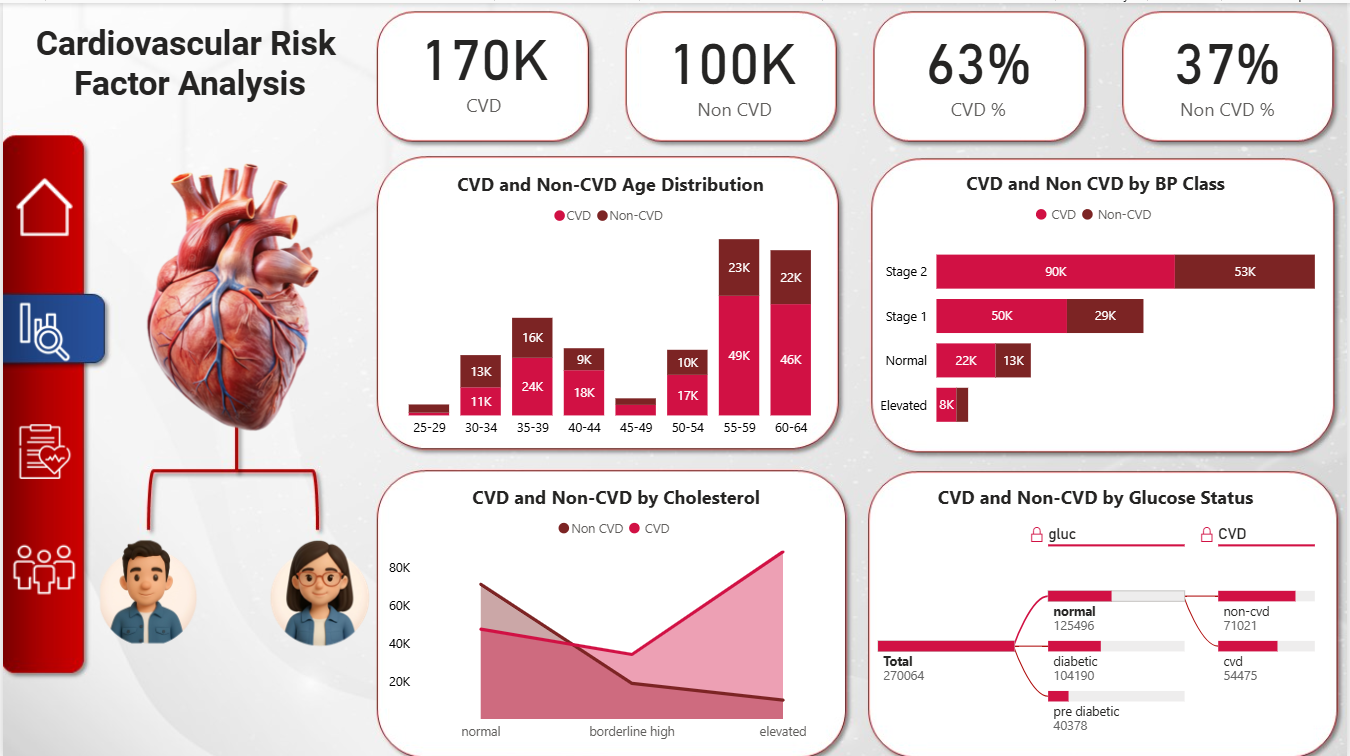
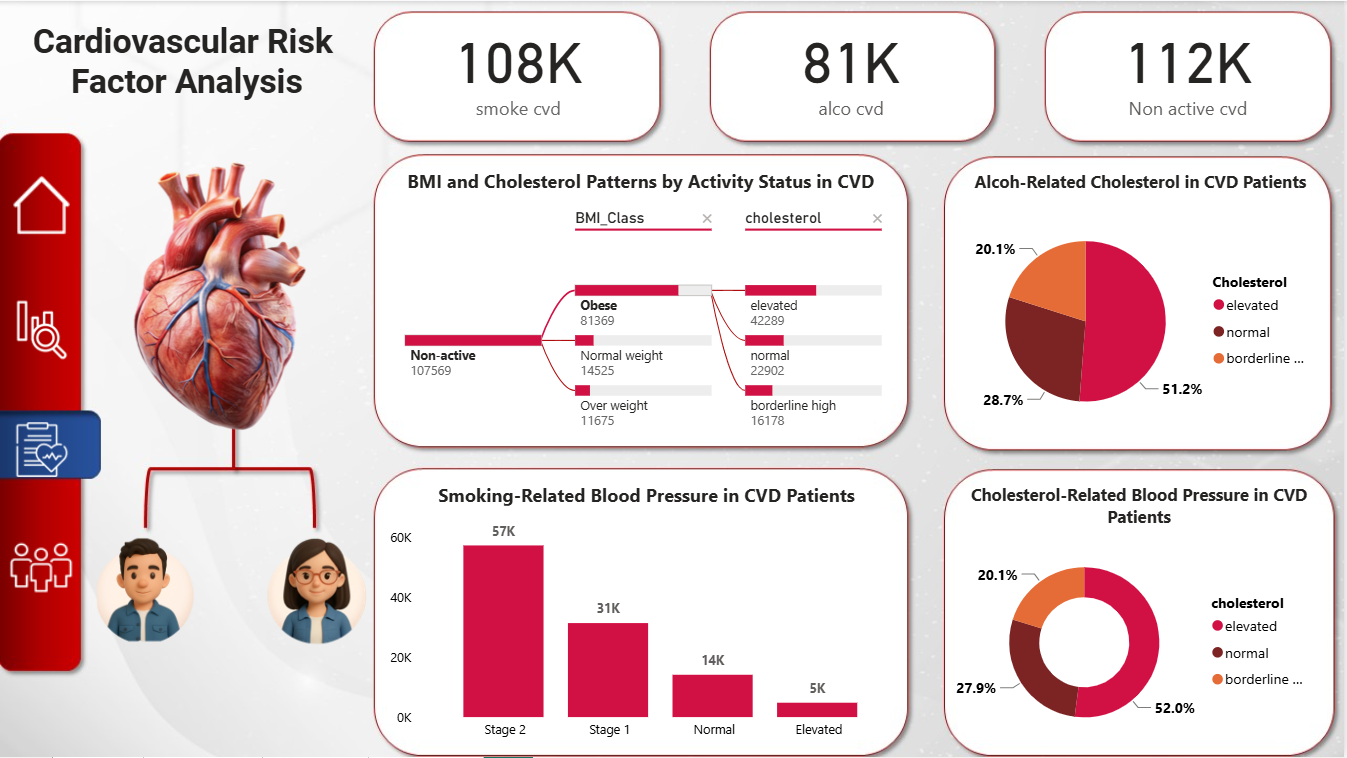
The dashboard provides a comprehensive comparison between CVD and non-CVD populations, highlighting differences across age groups, blood pressure categories, cholesterol conditions, and glucose levels. Additional analysis was conducted to identify relationships between lifestyle behaviors and cardiovascular risk, helping uncover patterns associated with higher disease prevalence.
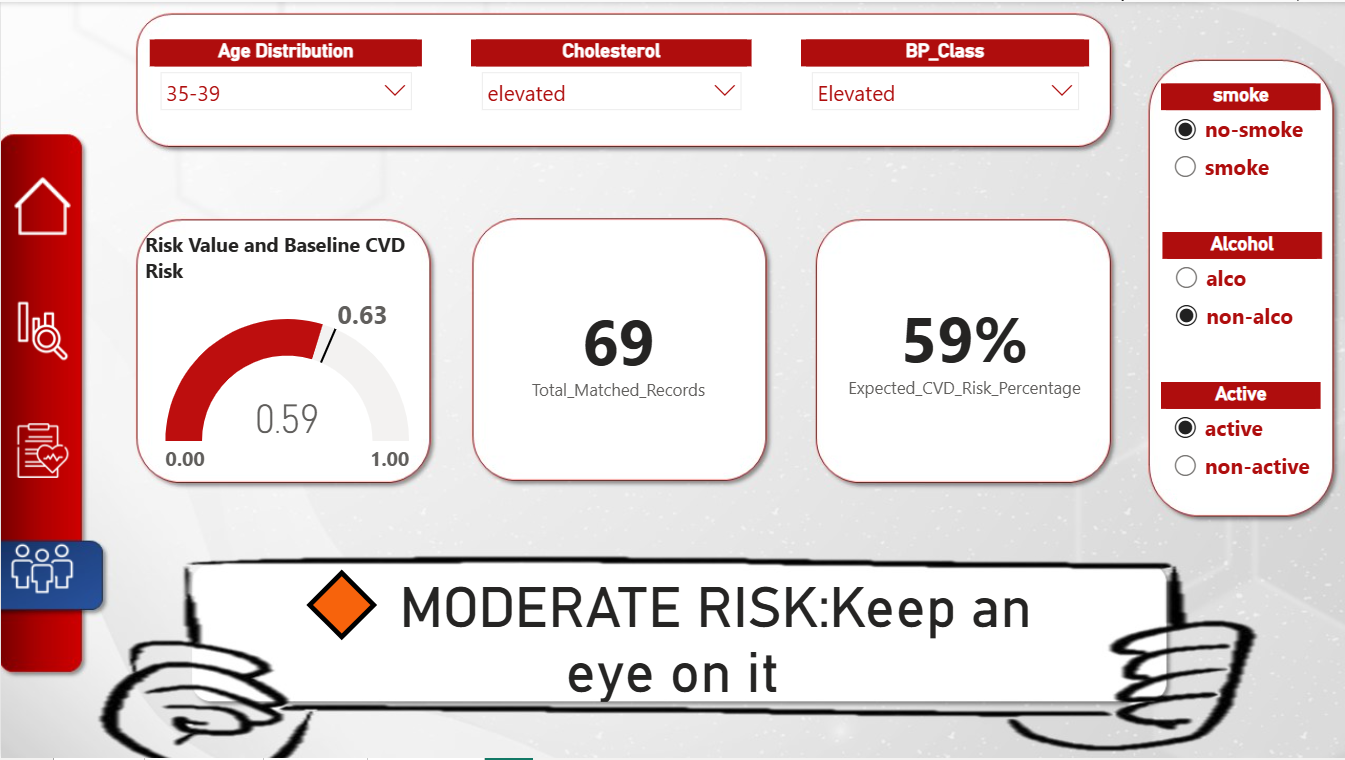
A dedicated risk evaluation section was also developed to estimate cardiovascular risk percentages based on selected health characteristics. Through dynamic filtering and interactive analysis, users can assess how different combinations of risk factors influence the likelihood of developing cardiovascular disease and identify potential risk categories ranging from low to high risk.
From a technical perspective, the project involved extensive data cleaning, preprocessing, statistical analysis, and exploratory data analysis (EDA) using Python to ensure data quality and uncover meaningful patterns before visualization. The reporting layer was built in Power BI using a structured data model, calculated measures, KPIs, interactive filters, and custom risk calculations to deliver a user-friendly analytical experience.
Overall, the project transforms raw healthcare records into a decision-support solution that enables healthcare analysts, researchers, and decision-makers to better understand cardiovascular risk patterns, identify vulnerable population groups, and support data-driven health interventions.